Was there a standard tooth count counter sprocket installed on all '73 Commandos from the factory, or could different sprockets be ordered on new bikes? Did most or all of them come with the 21 tooth sprocket? I have a Hi-Rider. I need to get a new final drive chain and its' length, of course, depends on how many tooth counter sprocket you have on your bike.

You are using an out of date browser. It may not display this or other websites correctly.
You should upgrade or use an alternative browser.
You should upgrade or use an alternative browser.
'73 Commando standard counter sprocket.
- Thread starter quawk
- Start date
- Status
- Not open for further replies.

CanukNortonNut
MEMBER
- Joined
- Aug 2005
- Messages
- 2,986

I believe that the 750's which were imported to North America came stock with a 19 tooth and 850's came with a 20 tooth Counter Sprocket. ( INOA Tech Digest )
UK and E.U. were slightly taller. IIRC. Please correct me if I'm wrong. Les, L.A.B. would most likely know for sure.
Roy Bacon Norton Twin Restoration book covers 19-22 tooth for Commandos. So you can purchase everything from 17 to 24 tooth C/S which the extremes are very rare.
UK and E.U. were slightly taller. IIRC. Please correct me if I'm wrong. Les, L.A.B. would most likely know for sure.
Roy Bacon Norton Twin Restoration book covers 19-22 tooth for Commandos. So you can purchase everything from 17 to 24 tooth C/S which the extremes are very rare.
Last edited:

- Joined
- Nov 2004
- Messages
- 21,418

I need to get a new final drive chain and its' length, of course, depends on how many tooth counter sprocket you have on your bike.
So, count the number of chain links.
Or, if you look between the lower run of the chain and the swingarm you can see the sprocket so clean the tip of one tooth and mark it with paint, then you can count the number of teeth.
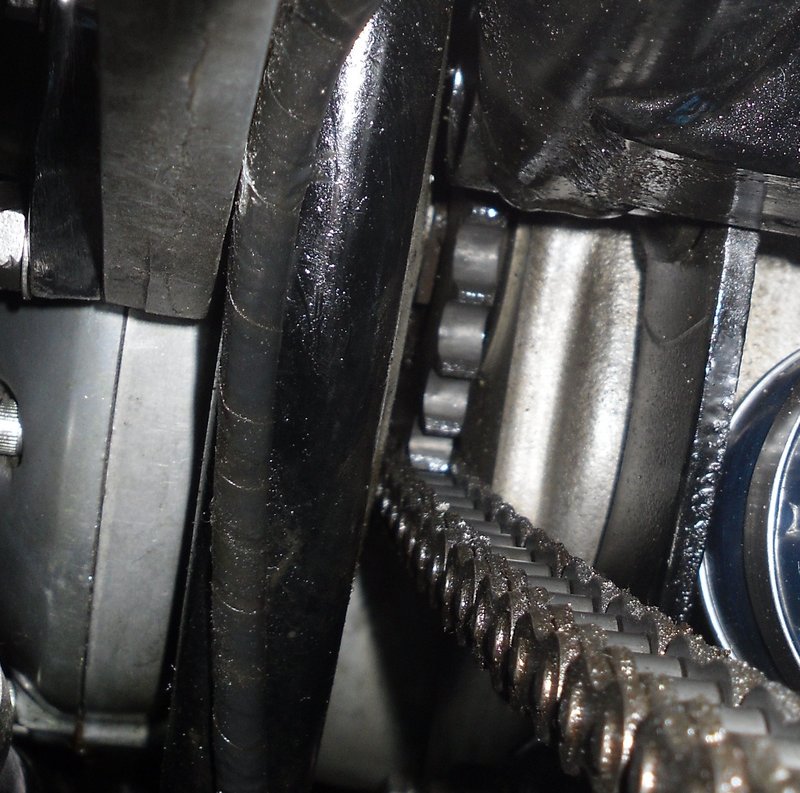


concours
FULL MEMBER
- Joined
- Dec 2011
- Messages
- 10,644

Assume you meant to write countershaft sprocket?Was there a standard tooth count counter sprocket installed on all '73 Commandos from the factory, or could different sprockets be ordered on new bikes? Did most or all of them come with the 21 tooth sprocket? I have a Hi-Rider. I need to get a new final drive chain and its' length, of course, depends on how many tooth counter sprocket you have on your bike.
Just COUNT the teeth!
Reach in with a paint marker, mark a tooth, rotate the wheel.

Torontonian
MEMBER
- Joined
- Dec 2009
- Messages
- 5,725
21. Your best choice .

luckyed
FULL MEMBER
- Joined
- Sep 2017
- Messages
- 60
Are you talking about how many teeth are on your existing sprocket or about getting a new sprocket and wondering which one to get?Was there a standard tooth count counter sprocket installed on all '73 Commandos from the factory, or could different sprockets be ordered on new bikes? Did most or all of them come with the 21 tooth sprocket? I have a Hi-Rider. I need to get a new final drive chain and its' length, of course, depends on how many tooth counter sprocket you have on your bike.


Fast Eddie
FULL MEMBER
- Joined
- Oct 2013
- Messages
- 23,162
Good point. Makes a difference....and as I always ask: "Where do you live and how do you ride"?

milfordite
FULL MEMBER
- Joined
- Feb 2012
- Messages
- 343
I just buy a long chain and cut it to fit.
concours
FULL MEMBER
- Joined
- Dec 2011
- Messages
- 10,644
"I need to get a new final drive chain and its' length, of course, depends on how many tooth counter sprocket you have on your bike."
Once you count your teeth, search the site here. It's been covered.
Or, paint mark your master link, count as you rotate the wheel.
Order same chain.
Look for half (crank) link.
Once you count your teeth, search the site here. It's been covered.
Or, paint mark your master link, count as you rotate the wheel.
Order same chain.
Look for half (crank) link.
Last edited:
CanukNortonNut
MEMBER
- Joined
- Aug 2005
- Messages
- 2,986
He carries IWIS chains which are very good.

Blewdy Yaink
FULL MEMBER
- Joined
- Nov 2018
- Messages
- 221
Yes. Any Commando today is likely to have had the gearing changed. I've owned road Commandos with 19t though 22t countershaft sprockets and raced with 24t sprockets. The difference between each one is stark and provides characteristics for different needs. The factory provided different sprockets at different times and for different models. If you're going to be relying on the number of teeth on your Commando, you have to count the teeth on the sprocket that's actually there after 50 years of riding after the bike left the factory -- there's a very good chance that the sprocket was changed by someone during its previous life.Just COUNT the teeth!
Reach in with a paint marker, mark a tooth, rotate the wheel.
OTOH, if you're interested purchasing a chain, it's much better to count the links that are on your existing chain. Once you have that info, inspect the adjustment and assure that your existing chain is providing correct adjustment location. (I've seen mis-specified chains fitted to Commandos with the adjustment all the way towards the rear of the motorcycle when the chain was new. As a chain wears normally, the adjustment will normally move towards the rear so a new chain should give correct slack and an adjustment location towards the front of the adjustment slot.)
It should also be noted that a worn chain will engage the sprocket (both countershaft and rear wheel) at a different point causing wear on the teeth of the sprocket. If you're going to change a chain because it's worn, it's a good idea to carefully inspect the teeth on both sprockets. Nothing will cause premature wear on a sprocket as a worn or poorly adjusted chain and nothing will cause chain wear and damage more quickly than a worn sprocket. When you're putting a new chain on is the perfect time to inspect everything. Don't just "get the right number of teeth" to order a new chain and install the new chain without checking everything.
IMO, the best way to install a new chain is to turn the rear wheel so that the "split-link" is visible, remove the split link and let the lower run of the chain fall loose (support it so it can't run backward due to the weight of the upper run). Then attach the new chain to the end link on the rear of the rear sprocket and turn the wheel so that the new chain is drawn along the correct chain run; soon the two ends of the new chain will come together so that the new split-link can be installed and the chain tension (and rear wheel alignment) can be adjusted. If you don't use the old chain to pull the new one in, you'll have one hell of a fiddly, greasy, frustrating job of getting the new chain up inside the chain guard, behind the primary cases, over and around the countershaft sprocket and back to the rear wheel sprocket.
It's not just a simple "put the new one on" job, it requires care and attention to all the details to assure everything is set up to perform correctly. Good luck.
Have done as all responders have suggested. Have counted the number of teeth on the countershaft sprocket (19 teeth) and the number of links of the chain that was removed (98 links). Have ordered a new 100 link 530 chain and will shorten if necessary. I realize that that proper length chain once adjusted properly should end up somewhere around mid-point between minimum and maximum allowable adjustment of the axle in its' adjustment slot. This bike having been "on the road" for only 8 years before being "put up" and with about 12,000 miles probably has the original cs sprocket on it. That's why I was asking if a given year of a given model pretty much all had the same sprocket installed originally. I know a lot of members here an the forum may have swapped cs sprockets looking for a better or more applicable ratio for their own type of riding, but most guys, especially back then (in the 70s) ran what came on the bike, at least until in maybe wore out, especially on a setup like Norton has where you couldn't just unbolt and swap the rear sprocket, and to get to the cs sprocket you had to do more disassembly to make a switch.

kommando
MEMBER
- Joined
- May 2005
- Messages
- 7,912
It won't, unless it happens to be the same sized gearbox sprocket as the original design, any different sized sprocket will change the position within the slot away from the middle as will the primary chain not being new and wear on the sprockets, both primary and secondary. Don't make that final cut until you are sure the axle is in a good position.I realize that that proper length chain once adjusted properly should end up somewhere around mid-point between minimum and maximum allowable adjustment of the axle in its' adjustment slot.
Now that I've counted the sprocket teeth and chain links and ordered a new 530 chain, it looks like in some past postings that some members have indicated that they have had trouble with "regular" 530 chain rubbing on the case, after installing new chain. Have also now read where a member says that the chain that Andover Norton sells is a "narrow" 530 chain and allows a bit more clearance. Can someone weigh in here and tell me if that is the case, and may I have a rubbing issue after installing a new chain.
concours
FULL MEMBER
- Joined
- Dec 2011
- Messages
- 10,644
That is inaccurate.Now that I've counted the sprocket teeth and chain links and ordered a new 530 chain, it looks like in some past postings that some members have indicated that they have had trouble with "regular" 530 chain rubbing on the case, after installing new chain. Have also now read where a member says that the chain that Andover Norton sells is a "narrow" 530 chain and allows a bit more clearance. Can someone weigh in here and tell me if that is the case, and may I have a rubbing issue after installing a new chain.
SOME O-RING type chains can rub.
Big difference to a standard, NON O-ring chain.
Here is a low cost, standard type NON O-ring chain, cheap as chips. Fit & function perfectly on the Commando.
I've used them for years, tossed them after 10,000 miles.
I do understand the difference between standard chain and O-ring chain, and realize that standard 530 chain is non O-ring chain. And it just so happens that the linked brand of chain that you posted, RK Standard 530 is what I ordered a day or two ago. Thanks for responding with some reassuring info.That is inaccurate.
SOME O-RING type chains can rub.
Big difference to a standard, NON O-ring chain.
Here is a low cost, standard type NON O-ring chain, cheap as chips. Fit & function perfectly on the Commando.
I've used them for years, tossed them after 10,000 miles.
CanukNortonNut
MEMBER
- Joined
- Aug 2005
- Messages
- 2,986

Andover Norton - REAR CHAIN (IWIS ELITE) 102 LINKS 5/8
REAR CHAIN (IWIS ELITE) 102 LINKS 5/8
 andover-norton.co.uk
- Status
- Not open for further replies.
Similar threads
- Replies
- 2
- Views
- 1,074

- Replies
- 2
- Views
- 1,368
- Replies
- 196
- Views
- 27,311

- Replies
- 5
- Views
- 2,605
