wet sump solution 2

Matt is right... HIS sump mounted reed valve does that....

MY dual reed valves are NOT sump mounted valves. One is mounted on the back side of the timing chest , and my other is mounted on the end of the camshaft because early bikes had a hollow cam and a port on the primary side of the crankcase half at the end of the cam..


Here's where one of my breather's is mounted... on the camshaft port
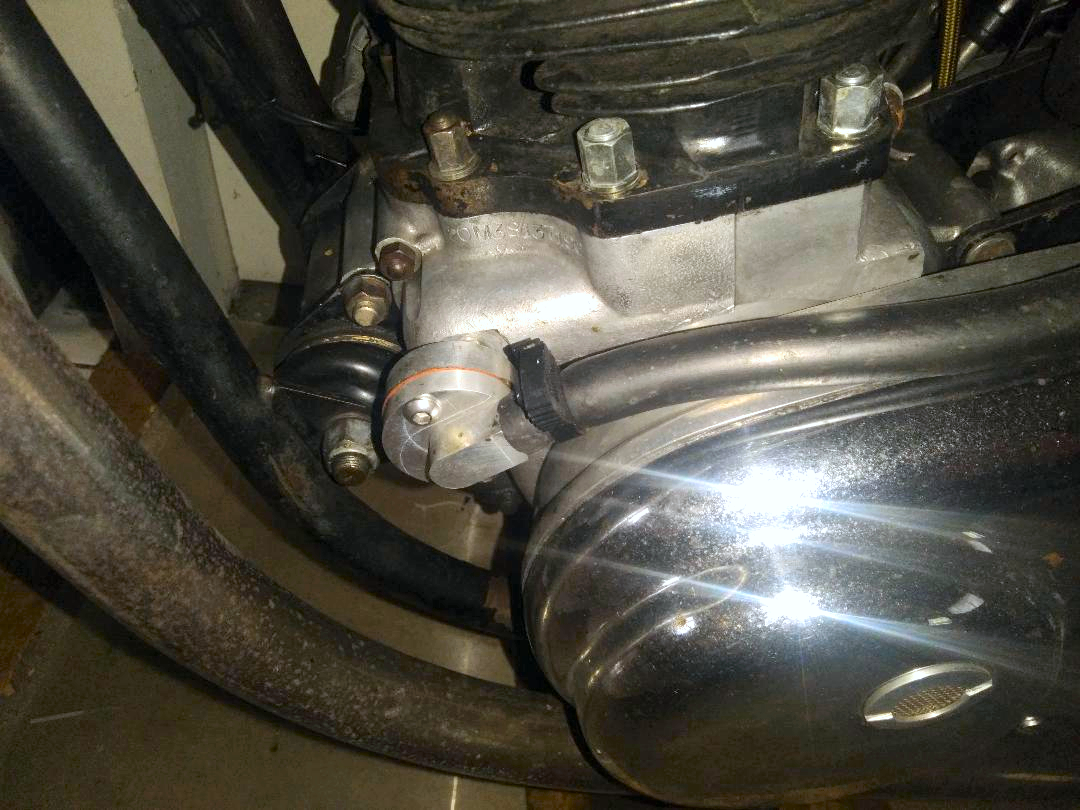
wet sump solution 2


Here's where my other breather is mounted on the timing side
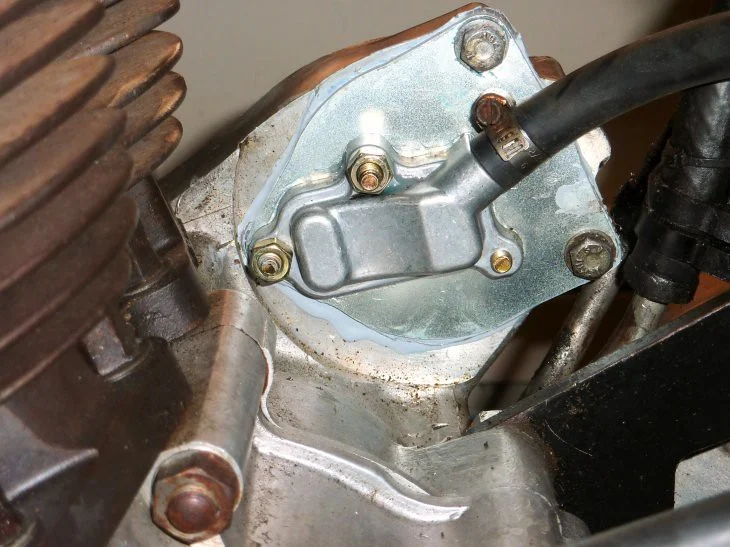
wet sump solution 2


Here's what my case looks like behind the timing cover
green arrow - breather reed hole
red arrows - 3/8" holes into crancase to allow air to move easily way above any potential oil height in the sump
yellow arrow- 1/4" hole drilled to lower the oil level in the timing chest so the breather blows mostly air
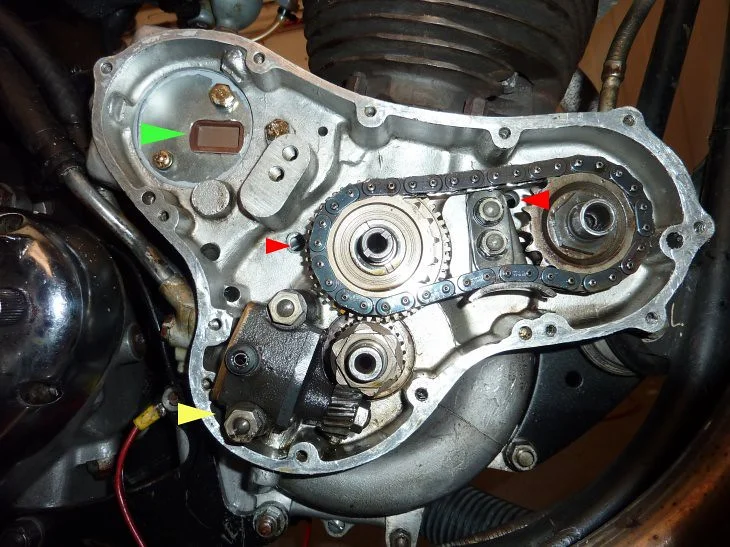
wet sump solution 2


I did these modifications before the sump breather that Jim Comstock developed was invented... and you should just buy one rather than copy my madness...
 
Matt is right... HIS sump mounted reed valve does that....

MY dual reed valves are NOT sump mounted valves. One is mounted on the back side of the timing chest , and my other is mounted on the end of the camshaft because early bikes had a hollow cam and a port on the primary side of the crankcase half at the end of the cam..


Here's where one of my breather's is mounted... on the camshaft port
View attachment 125109

Here's where my other breather is mounted on the timing side

View attachment 125110

Here's what my case looks like behind the timing cover
green arrow - breather reed hole
red arrows - 3/8" holes into crancase to allow air to move easily way above any potential oil height in the sump
yellow arrow- 1/4" hole drilled to lower the oil level in the timing chest so the breather blows mostly air
View attachment 125111

I did these modifications before the sump breather that Jim Comstock developed was invented... and you should just buy one rather than copy my madness...
Thanks for the explanation and photos! Very helpful.
 
Thanks. I may have misunderstood Matt at Colorado Norton Works, but I thought he told me that the reed valve breather returns oil to the tank in addition to the oil pump return line - that it adds a second way oil can return to the tank. I understood him to say that adding a reed valve breather is now the only thing they do to manage wet-sumping. Put another way, that a reed valve breather will return oil to the tank so quickly that it doesn't matter how much oil may have collected in the sump when the bike is sitting, and when it's running, if the oil pump isn't keeping up returning oil to the tank, the reed valve breather picks up the slack. Again, I may have misunderstood him.
I will disagree with what you said CNW said....if the engine is fully wet sumped, ie ALL oil from the tank is now in the sump, there will be no oil pressure at startup until enough oil has made it back to tank, and worked its way back down the feed line to the pump. This may take several seconds after engine starts up.

My soluton fully prevents wetsumping by closing a tap on feed line btwn rides...and a microswitch in the tap to defeat igitiin saves any potential forgetfulness on my part.
 
I will disagree with what you said CNW said....if the engine is fully wet sumped, ie ALL oil from the tank is now in the sump, there will be no oil pressure at startup until enough oil has made it back to tank, and worked its way back down the feed line to the pump. This may take several seconds after engine starts up.

My soluton fully prevents wetsumping by closing a tap on feed line btwn rides...and a microswitch in the tap to defeat igitiin saves any potential forgetfulness on my part.
I don't disagree - That's why I also installed a Feked anti-wet sumping valve (tap) with the electrical cut out switch to insure that if I forget to open the valve the bike won't start. I have both the Feked and the CNW reed breather. But I defer to Mike at CNW on the subject. I don't recall asking hm what happens if all the oil has seeped out of the tank and into the sump.

The weird thing is that, from what some folks have posted, it seems like some of these bikes wet-sump like crazy (your example of a bike sitting long enough to empty the tank completely - the dipstick level on mine dropped around 1/8 inch every few days even after new MKII timing cover and pump with the AMR modification), while others seem to wet sump minimally or maybe not at all. Maybe that's atrributable to the different deisgns of the crankcases and location of the holes in the cases into the timing cover area. That's above my pay grade.
 
Last edited:
I don't disagree - That's why I also installed a Feked anti-wet sumping valve (tap) with the electrical cut out switch to insure that if I forget to open the valve the bike won't start. I have both the Feked and the CNW reed breather. But I defer to Mike at CNW on the subject. I don't recall asking hm what happens if all the oil has seeped out of the tank and into the sump.

The weird thing is that, from what some folks have posted, it seems like some of these bikes wet-sump like crazy (your example of a bike sitting long enough to empty the tank completely - the dipstick level on mine dropped around 1/8 inch every few days even after new MKII timing cover and pump with the AMR modificatio), while others seem to wet sump minimally or maybe not at all. Maybe that's atrributable to the different deisgns of the crankcases and location of the holes in the cases into the timing cover area. That's above my pay grade.
My 850 will loose all tank oil, level below the pickup screen, within 2 to 3 wks sitting...before I fitted the tap amd microswitch. Cheap (esp if you cobble it together yourself like I did..$15 & an hour or two work), easy, sorts the problem entirely.
 
I run the same crank case the way it come from the factory without any holes drilled or modified, my oil pump is the original oil pump that has never been touched/pulled apart in the 50 years of ownership, had the seal replaced every time the motor has had bottom end work and reprimed after any work done, I don't run any oil pressure gauge or oil light, and I never worry about the oil pump doing its job, but will check the oil return in the tank every so often, I just start it and ride it without even thinking about the oil pump and as I say it only wet sumps if I let it sit for over 4 month, but once I forgot to turn off my fuel taps and one float stuck, not knowing this I fired up the bike and oil and fuel pumped out of my breather hose and filled up my catch bottle, that was about 35 years ago, I now run a yammy reed valve on my breather hose beside the crank where the breather comes out of the crank case, that was the first time it wet sumped and has only wet sump 2 x after that.
My Norton has been sitting now for 5 1/2 months since my accident still have oil in the oil tank but its down from its normal level so the rest be in the crank, my round oil tank only holds 2 1/2 ltr of oil, I also run a Lochead oil cooler all year round and also mix STP in my oil since 1982.
My 850 has been a everyday ride most of its life only semi retired in 2013 but ridden regularly when I brought a new Thruxton, has well over 160k miles on it and average between 6k to 10k miles a year when it was an everyday rider, if it did wet sump from sitting to long I just drain the oil but as I said have only done that3 times in 50 years, no big deal for me.

Ashley
 
FWIW, back in the day my '71 Commando regularly sat over the winter for 2-3 months and in the spring I just re-connected the battery and kicked the bike to life. I never heard of wet sumping, never checked to see if oil was flowing into the tank, never thought about oil pressure.

I will admit that nowadays I do look in the tank after layup and if the oil level is below the feed line, I drain oil/add it back to the tank. Frankly, I don't know why I do this now; I never did it back then and I put a bit over 70,000 miles on that Commando. Must be the bad influence of the internet! ;)
 
FWIW, back in the day my '71 Commando regularly sat over the winter for 2-3 months and in the spring I just re-connected the battery and kicked the bike to life. I never heard of wet sumping, never checked to see if oil was flowing into the tank, never thought about oil pressure.

I will admit that nowadays I do look in the tank after layup and if the oil level is below the feed line, I drain oil/add it back to the tank. Frankly, I don't know why I do this now; I never did it back then and I put a bit over 70,000 miles on that Commando. Must be the bad influence of the internet! ;)
If you've started the bike when the oil level in the tank is low, but not below the feed line, it's possible that excess pressure from the oil that did seep into the sump has blown your primary (left) side main crankshaft seal. The way to check is to see how much oil is in the primary case. It should have 200cc. (unless you've replace your primary chain with a notched belt). There's a small bolt/plug in bottom center of the primary cover. If you take that out and more than a trickle of oil comes out of the Primary, you've probably got a blown left side crankshaft oil seal caused by excess pressure in the crankcase from running it with too much oil in the sump. (Some folks report that the excess pressure didn't blow the main seal, but forced engine oil past the threads of the stud that holds the alternator into the primary.)
 
I've read zillions of posts about anti-wet sumping and researched it a lot. Mine is a 1973 750 Roadster (which has a '72 Combat crankcase from the factory - apparently they had the Combat cases left over and used them on '73 Roadsters).
All 1973 750 (MkV) used the same cases as the 1972. Front sump and rear crankcase vent.
 
The only problem I had with wetsumping was long ago when I went to start my bike after winter storage. I was in a hurry when I checked the oil level and it was way down so I filled the oil tank and started it. Then the oil in the sump overflowed the oil tank to the point where it blew oil out the oil tank vent and all over my rear tire. I'll never make that mistake again. If the tank is empty - Just add a cup or so of oil and recheck the level after warmup.
 
Back
Top