Spark Plugs do not fit

Elfix,
Yes, according to your description I have been starting and riding the bike with the choke closed. With the new plugs I noticed that the one side was still sputtering a bit. I ever so slightly adjusted the throttle adjusting screw and bike just settled down into a nice tick over.
 
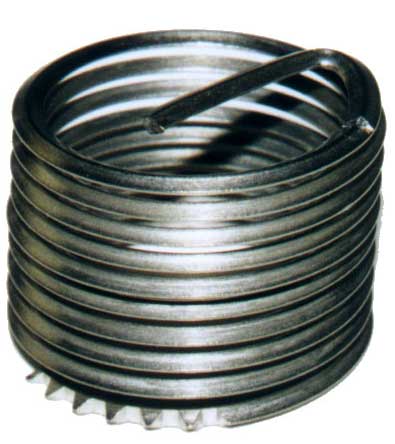
The main problem about plug-Inserts is that the plugs are get tightened to the Inserts if the Inserts are not ca. +- 0,20-0,30 mm deeper than the sealing surface of the Head, therefore is a special Cutter in the Time-Sert Kit to resolve the sealing surface, but is has to be controlled that the insert is in any case lower than the sealing- surface of the Head
 
The main problem about plug-Inserts is that the plugs are get tightened to the Inserts if the Inserts are not ca. +- 0,20-0,30 mm deeper than the sealing surface of the Head, therefore is a special Cutter in the Time-Sert Kit to resolve the sealing surface, but is has to be controlled that the insert is in any case lower than the sealing- surface of the Head
I agree. I would not bother with something more elaborate than a helicoil for mechanical fastening but for gas sealing go with a time cert. I have dealt with problem of several types of inserts but never a timecert. Worth the money for that application.
 
I agree. I would not bother with something more elaborate than a helicoil for mechanical fastening but for gas sealing go with a time cert. I have dealt with problem of several types of inserts but never a timecert. Worth the money for that application.
About thirty years ago I begun with Heli-Coils, because I dind't know of other possibilities, but after I received my first kit of Time-Serts I change the course and I am very satisfied with them. Also I have saved many Heli-Coil repairs because the external thread is luckily the same, but with all of this Repairs, you need always a very good Handmade work and very much sentivity to get it right
 
All modern aircraft cylinders from Continental and Lycoming, the vast majority on certified planes, use a special type of helicoil from new. Since spark are routinely removed for maintenance - removing lead mostly plus doing regular compression checks screwing into the aluminum casting would quickly wear out. It's a special type of heli coil in that it has a locking mechanism that requires special tooling. Although I'm aware of a repair tooling kit I've never seen a bad one. 18mm plugs are installed with 30 lbft torque. Aircraft use heli coils in other aluminum castings as well.
 
Here's their kit for the experimental aircraft market which use 14mm plugs generally directly into aluminum. Quality kit with piloted tap and multi length inserts.
The inserts are not the same as those in certified engines and probably don't have the locking feature:
 
All modern aircraft cylinders from Continental and Lycoming, the vast majority on certified planes, use a special type of helicoil from new. Since spark are routinely removed for maintenance - removing lead mostly plus doing regular compression checks screwing into the aluminum casting would quickly wear out. It's a special type of heli coil in that it has a locking mechanism that requires special tooling. Although I'm aware of a repair tooling kit I've never seen a bad one. 18mm plugs are installed with 30 lbft torque. Aircraft use heli coils in other aluminum castings as well.
I was installing Helicoils on new aircraft Parts 47 years ago… I've never had any trouble with them.

Also, my 1974 shovel head had them in the spark plug holes from the factory. My daily driver junior year in high school.
 
Last edited:
I don't have the ability to post pictures but in this link you can see the locking feature of an aircraft insert. It requires a special tool to seat in the aluminum head; they don't come out. I don't know why anything with an aluminum head doesn't have these from new. Yeah, I know if properly torqued they don't need them but how many folks actually use a torque wrench?
 
Because most all the threads last the expected lifetime of the part or product. All my bikes are over 50 years old and none have the spark plugs Helicoils and only a few bikes I've worked on have had I had to Recoil the head studs. I do plenty and many spark plus chops on all my equipment. So, my plugs are in and out hundreds of times. And the threads will outlive me.
 
Last edited:
Because most all the threads last the expected lifetime of the part or product. All my bikes are over 50 years old and none have the spark plugs Helicoils and only a few bikes I've worked on have had I had to Recoil the head studs. I do plenty and many spark plus chops on all my equipment. So, my plugs are in and out hundreds of times. And the threads will outlive me.
Of course you're respecting the limitations of the aluminum casting threads and rightly so. A kid with a nice long ratchet is probably where most problems begin. A big all- metal aircraft plug torqued to twice the value of a Norton plug demands something stronger than aluminum. Older aircraft engines used a large bronze bushing - all radials , inline, and some early flat engines. Ford sadly only has four threads holding plugs in their Triton engines and they regularly blow out even when properly torqued from the factory. The repair kit uses a staked-in insert, not a heli-coil. This is the kit favored by most shops as it has a nice guide to center it for in situ repairs:
 
Back
Top